The treatment of oil and grease in wastewater through mechanical methods (grease traps and screens), chemical methods (such as degreasing agents like alum and oil separation solutions), and biological methods (microbial formulations) effectively addresses oil and grease contamination. This approach helps prevent blockages, reduces environmental impact, and safeguards human health.
Grease is one of the causes of clogged drains. Not only that, if grease is discharged into the environment without treatment, it will cause serious pollution, hurting the landscape as well as human health. In this blog, NTS Engineering Co., Ltd. will introduce to you solutions to treat grease in wastewater that are both effective, cost-saving, and environmentally friendly. Refer to it now.
1/ Why is it necessary to treat grease in wastewater?
Oil and grease in wastewater – enemies of drainage systems
How to treat grease in wastewater to avoid serious environmental pollution
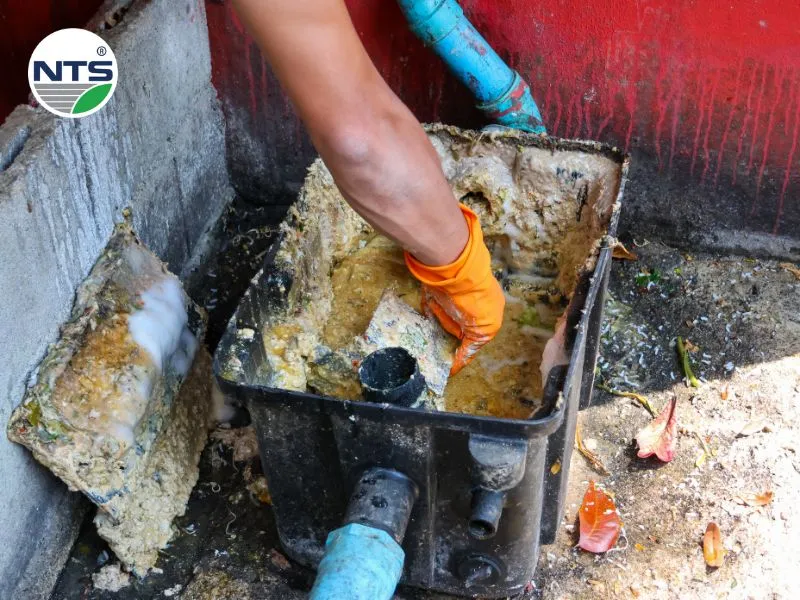
Every day, large volumes of animal and vegetable oils are discharged into the environment, especially from restaurants, eateries, businesses… However, many of the above places do not have wastewater treatment technology or proper ways to handle grease in wastewater. This is one of the main causes of sewer blockages.
Not only businesses, but many households are also unaware of the need to separate grease before discharging wastewater. As a result, domestic pipelines that should carry only greywater often become dumping grounds for cooking grease.
Consequences of not properly treating your wastewater
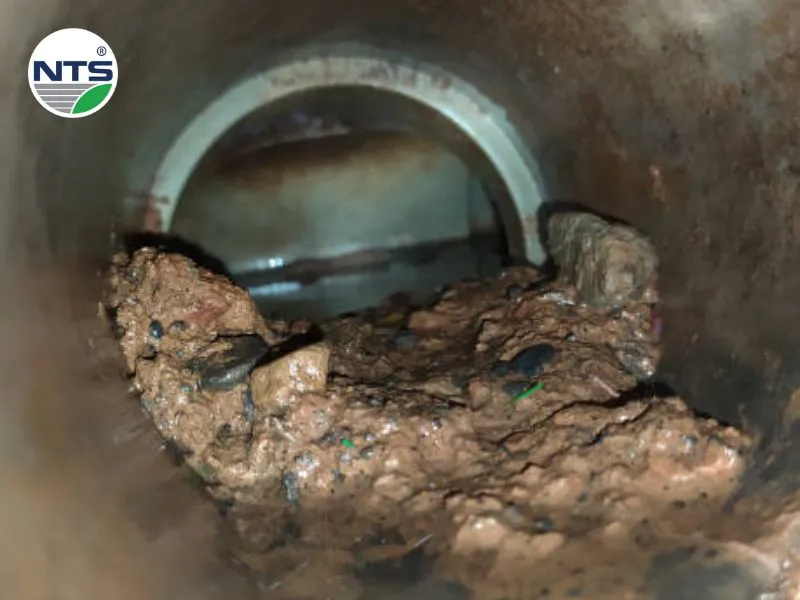
Fats, oils, and grease (FOG) are composed of organic compounds and are used in food production and processing. Compounds that flow into the drainage system of the sink or water pipes will not flow away but often stick to the pipe walls. Over time, they will attract many other wastes that stick to the pipe walls and cause blockages.
How to effectively treat grease in wastewater
FOG in wastewater, if not thoroughly treated, will cause strong odors, slow drainage, periodic grease pump failure, causing stagnation, water rising back to the surface, increasing maintenance costs, etc.
All of the above causes can paralyze the entire drainage system, causing wastewater to be unable to flow and even become stagnant. Therefore, oil and grease are considered “the main culprits” of environmental pollution and a contributing factor to various serious human health issues.
2/ Methods for treating oil and grease in wastewater
Mechanical treatment of oil and grease
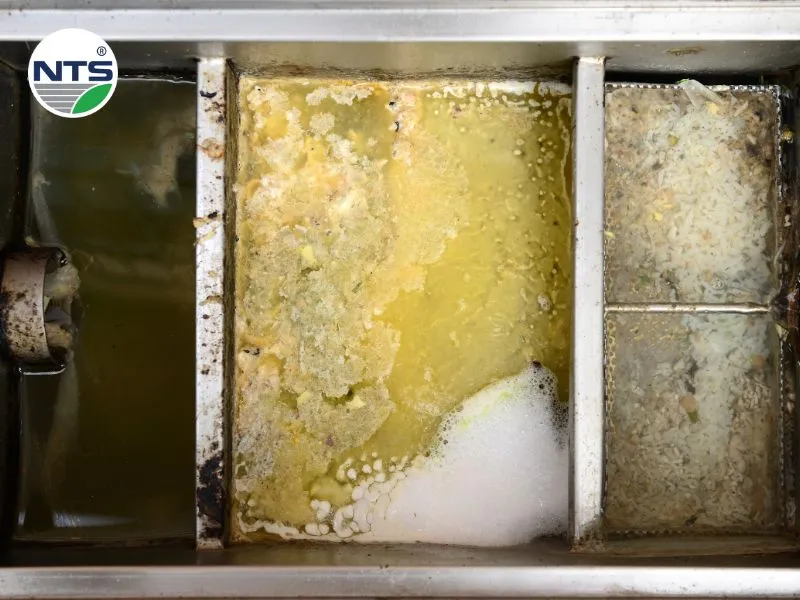
One of the most common methods for treating oil and grease in wastewater is the mechanical method. Grease-contaminated wastewater flows into a grease trap, based on the principle that grease is lighter than water—the oil rises to the surface. Food scraps and solid residues settle at the bottom of the tank. The clarified water then exits through an outlet pipe and flows into the collection chamber.
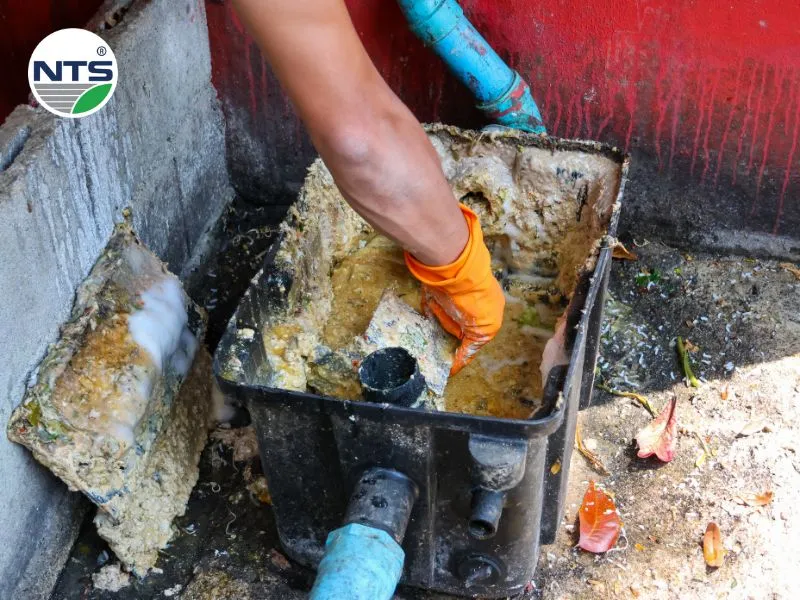
How to treat grease in wastewater by mechanical method
Microorganisms treatment of oil and grease
There are many types of grease-eating microorganisms on the market. This product is in powder form and contains billions of grease-eating microorganisms. These microorganisms will quickly activate when dissolved in water. The product can be dissolved in tap water and can be stored for 60 days.
When separating grease from the tank, people often use microorganisms to completely eat the grease in the tank. Therefore, you will not have to spend a lot of effort skimming grease and do not worry about disposing of excess grease from the grease skimming process like the mechanical grease separation method.
The advantage of this method is that it reduces the amount of grease in wastewater by 50 – 70%. Significantly reduces the amount of grease clumping, minimizes odors, does not cost to treat excess grease, is easy to use, reduces system maintenance costs and reduces sludge formation from the bottom of the tank.
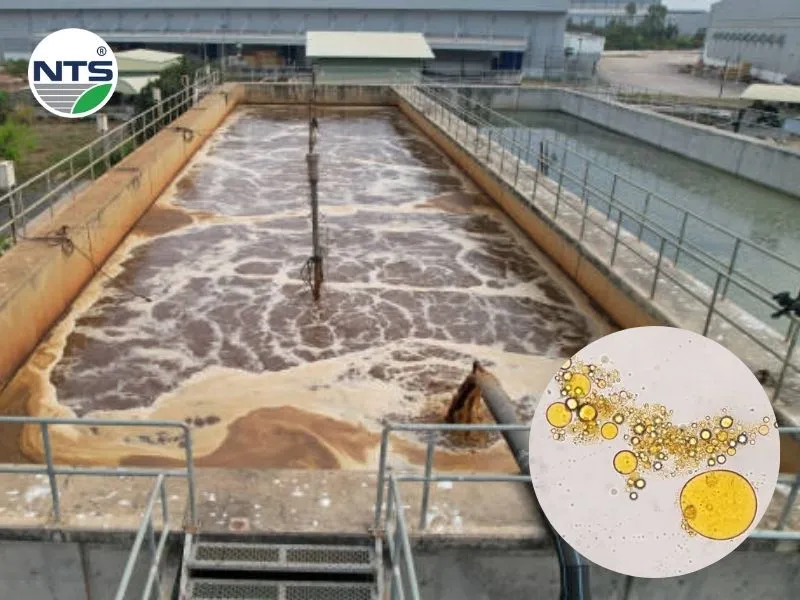
How to treat grease in wastewater using microorganisms
Below is a summary table of microbial products that are commonly used for wastewater treatment:
Table of microorganisms for grease treatment
| Products | Main Function | Product Form |
|
Microbe-Lift DGTT |
Treating Oil and Grease in Wastewater |
Flour |
|
ACF-32 (AquaClean) |
Treating Oil and Grease in Wastewater, as well as COD, BOD, and organic matter |
Solution |
|
Original EM (EM-1) + Secondary EM (Activated EM) |
Microorganisms decompose organic matter, including oil and grease |
Solution |
|
Biogency FOG |
Specializing in treatment oil |
Flour |
Chemicals treatment of oil and grease
Grease removal chemicals are widely used to treat oil and grease in wastewater and within sewer pipes. These chemicals can rapidly break down and dissolve grease before the wastewater is discharged into the external environment.
Some chemicals for treating wastewater containing grease
| No. | Chemical Name | Product Form |
|
1 |
PAC (Poly Aluminium Chloride) |
Helps grease coagulate to separate easily from water, convenient for collection |
|
2 |
Aluminium Sulfate |
Helps grease coagulate to separate easily from water, convenient for collection. In addition, it helps clear water |
|
3 |
NaOH |
Adjusting the water’s pH, supporting the grease separation process |
|
4 |
H2SO4 / HCl |
Adjusting the water’s pH, supporting the grease separation process |
|
5 |
Oil Splitter Solution |
Supports efficient oil and water separation |
|
6 |
Light Organic Solvent (exp: D-limonene) |
Dissolve grease |
|
7 |
Demulsifier |
Supports efficient oil and water separation |